

The new generation of our fire alarm control panels hardly differs from the current BZ300 range in terms of basic function. The signal reception and signal processing function blocks as well as the alarm outputs and the power supply are fully available in both the new and current versions. However, thanks to the use of state-of-the-art electronic components – the microprocessor – numerous additional functions have been integrated into the control panel and user-friendliness has been significantly improved.
This increase in the range of services requires practically no additional hardware components such as prints, a diode matrix and relays, nor any complex cabling. All functions of the control panel are contained in the software used to operate the microprocessor. This software is divided into two parts, the basic programme for the unchangeable control panel functions and the user programme, which reprogrammes according to each object and takes over the functions of the alarm matrix, the delay and inspect circuit, and the fire incident control.
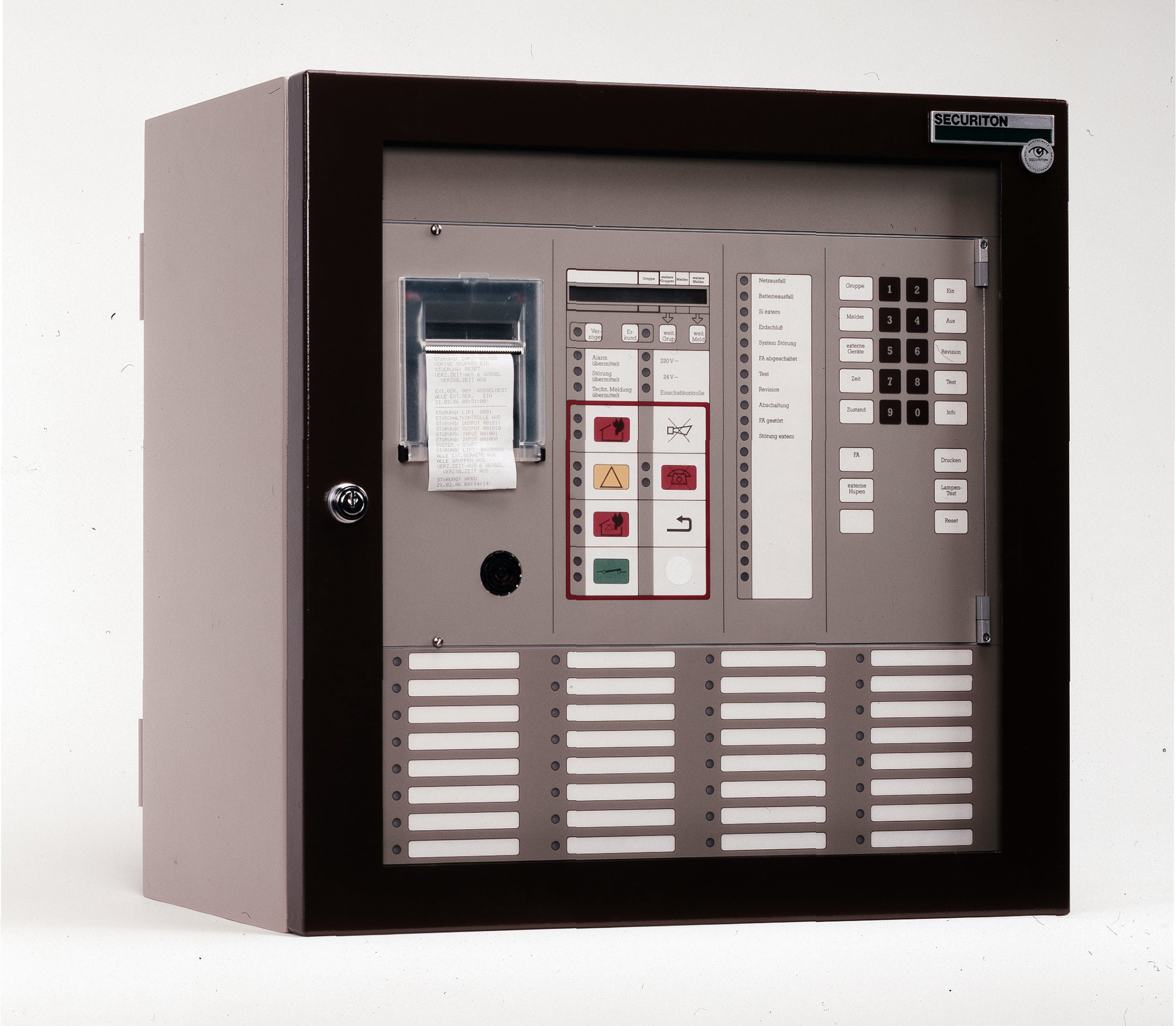
Apart from the stage of extension, each control panel then looks the same from the outside and the customer-specific design is only visible in the software program. In other words, this also means that no wiring work has to be carried out for the control panel, as all necessary connections are performed as standard using a flat cable. The benefits of the features can be divided into two parts – additional functions and user-friendliness. The latter is reflected in the fact that all switching functions can be entered centrally via a single keypad. A 24-digit display shows switching states and alarm and fault messages in plain text. All manipulations on the control panel can be logged using a printer on request. The new technology makes it possible to mount the entire keypad (97 lights, 33 keys, a printer and a display with 24 characters) remotely from the control panel via a four-wire cable. The additional functions made possible by the new technology allow the FAS to be adapted better to the object to be protected. For example, it will be possible to delay individual detectors in a zone and leave the remaining detectors on direct alarm transmission. Furthermore, detectors mounted in a zone prone to false alarms can be equipped with intermediate alarm storage, which means that the same detectors have to detect the alarm criterion twice before the alarm is forwarded. Only a few of the many advantages that can be realised thanks to flush mounting technology are listed here. With this in mind, the BMZ 340 represents a further step on our path towards more reliable fire detection.